
Giles County Tax Record Contents
Giles County splits its property tax records between two offices. The Commissioner of the Revenue sets assessment data and tracks ownership history. The Treasurer holds the bills, payments, and account details. On the CAMA site, a 2026 reassessment appears alongside an ownership snapshot date. The Treasurer's help pages describe its search modes plus a yearly paid-tax screen. The split matters. A payment record proves nothing about title. An assessment figure is not the tax bill itself.
| Field | What It Shows | Where |
|---|---|---|
| Assessment and ownership history | Parcel value and ownership file maintained by the Commissioner | Commissioner / CAMA |
| Land use and tax relief | County programs recorded with assessment responsibilities | Commissioner |
| Tax ticket and account history | Bill detail and payment history for an account | Treasurer inquiry |
| Yearly taxes paid | Map Number, ticket, bill date, description, and amount | Treasurer yearly lookup |
| Recorded transfer | Deed parties and document reference, not a tax bill | Circuit Court Clerk |
Virginia law requires assessments at 100 percent of fair market value. Even so, an assessment is a public tax valuation. It is not an appraisal, and it is not a guaranteed sale price. The bill amount answers one question. The consideration on a recorded deed and the assessed value each answer another. Before drawing any conclusion about a Giles County property, compare the date behind each figure. Compare the source, too.
Giles County's January Assessment Date
Giles County's Commissioner CAMA disclaimer sets January 1, 2026, as the assessment date. Ownership and 2026 reassessment figures reflect that snapshot. Any value change later in the year does not touch the current bill. The current bill rests on the January date. A buyer whose sale closed after that snapshot should look at the latest recorded deed. If the website ever differs from the office's own records, the office records govern.
That date is a limit, not a sign that later deeds are missing. Note the assessment year beside the value. Then compare it against the deed date and the Treasurer's bill detail. The CAMA terms notice carries the exact date statement.
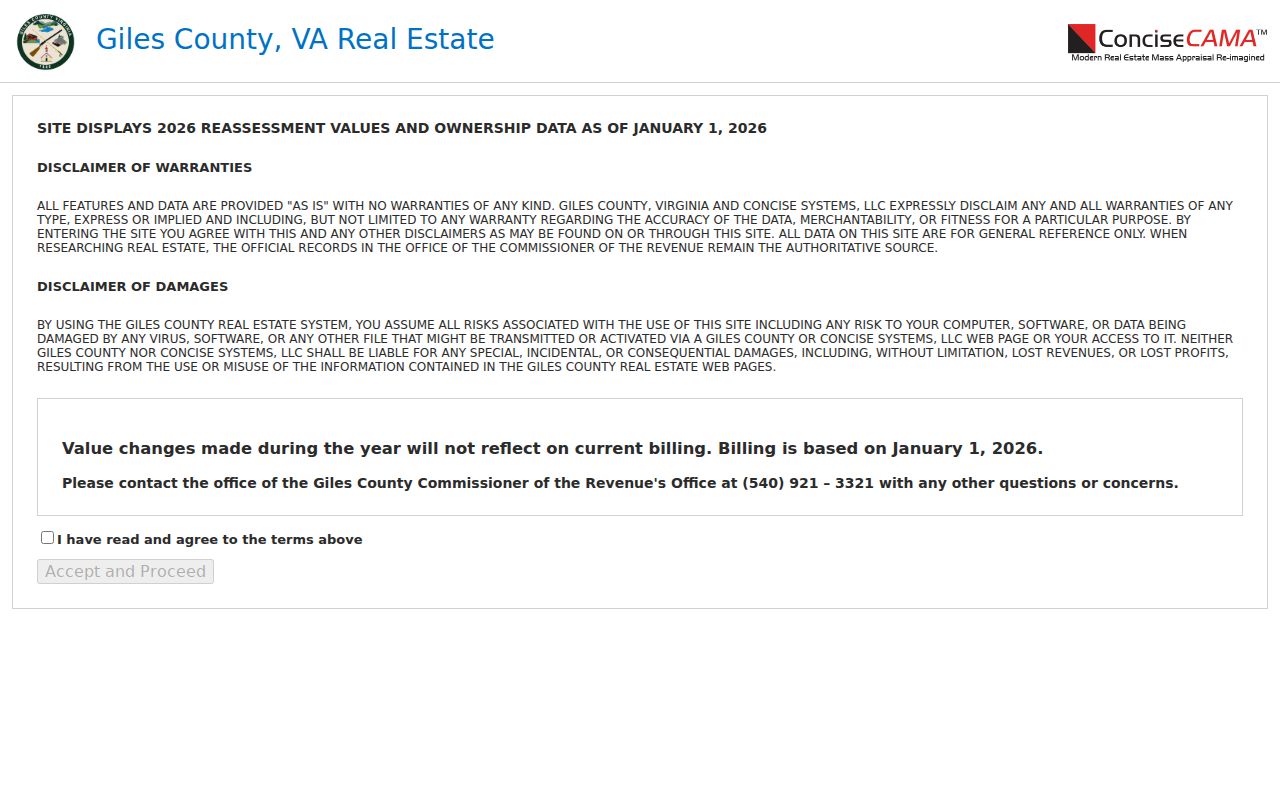
The CAMA disclaimer gives the date, not the value.
Commissioner and Treasurer Roles
The Commissioner of the Revenue maintains the ownership and assessment files: parcel history, deed and plat references, land use, and tax relief. According to its real-estate page, the county reassesses every four to six years and uses sales-ratio analysis to move assessments toward fair market value. The Treasurer never sets the assessment. That office handles the tax bill, payments, the account ticket, and penalty or interest math.
For an assessment question, start with the Commissioner at (540) 921-3321. For a bill or payment history, call the Treasurer at (540) 921-1240 or visit 130 N. Main Street in Pearisburg. Never read an old bill amount as proof of the current owner's title status. The two offices keep related records, but neither replaces the clerk's land-record index.
See the Commissioner's real-estate information and the Treasurer e-services page.
Finding a Giles County Tax Bill
Start by deciding what you need. An assessed value, a current balance, a single payment, and a history of annual payments are separate records. Pull the assessment and ownership reference from the Commissioner's real estate card first. Then carry its parcel or account key into the Treasurer's Real Estate Public Inquiry. The Treasurer lays out a flow from the first search to a matching-name selection, then an account history, then a bill detail screen. Following that order lets you confirm the account before trusting a total.
The projected date on the Treasurer inquiry is optional. Left alone, it defaults to the current date when calculating penalty and interest. That makes it a date-sensitive projection. It is not a different assessment or proof of what was due on an earlier day. Save the date you used whenever you compare a bill detail with a receipt or a prior-year paid-tax record. If a number looks off, call the Treasurer at (540) 921-1240 and give the account or map number so staff can separate similarly named accounts.
The Real Estate Public Inquiry itself begins with a choice of search method. A parcel number works well when you have one. For a block search, enter the street name without its street number. With only a name, type the last name first. The projected-date option stays optional and defaults to the current date for penalty and interest math.
- Open the Real Estate Public Inquiry and choose name, account, parcel, or street mode.
- Enter the matching key; omit the house number for street mode.
- Select a matching name or account and review the history and bill detail.
- Carry the parcel number to CAMA for assessment context and to the deed index for ownership confirmation.
- Assessed value
- The valuation used by the assessment system under Virginia's fair-market-value rule.
- Tax bill
- The Treasurer's account statement for a parcel or taxpayer account.
- Land use and tax relief
- County assessment programs maintained by the Commissioner; ask the office for current program details.
- Tax lien
- A recorded or legal claim tied to unpaid taxes; verify the current status with the Treasurer and clerk.
Giles County Treasurer Search Modes
The inquiry help describes four search keys and one optional calculation date. It publishes no exact account-number or parcel-number format. There is no minimum partial-name rule, and no cap on results. Pick the mode that fits the evidence already in hand. Avoid combining fields the form may not support.
| Name | Last name, then first name; partial-match rule not stated. |
|---|---|
| Account number | Taxpayer account key; exact format not published. |
| Parcel number | Property parcel key; punctuation not published. |
| Street name | Use the road name without a street number. |
| Projected date | Optional; defaults to current date for penalty and interest. |
The Treasurer's official help page gives these field instructions and the selection flow.
Yearly Paid-Tax Results in Giles
The Treasurer keeps a yearly taxes-paid lookup apart from the general inquiry. Enter a last name and a tax year. The result comes back field by field. Each record carries a map number, ticket, bill date, description, and amount. Treat the bill date as its own fact, separate from the day a payment cleared. The two can differ by weeks. The help page never names a first year of online coverage. Nor does it cap how many years the search returns. If the period you need does not come back, ask the Treasurer about older material.
Remember what this view is. It shows payment history, not a full ledger of every charge against a parcel. It also hands you the parcel key tied to a tax ticket. That key is handy for follow-up questions. Before comparing anything, match the map number and ticket to the Treasurer account. That way the payment lands on the right parcel.
One caution matters here. A tax payment proves only that someone paid. It does not prove the payer owned the land that year. For ownership, go to the Commissioner's parcel history. Also check the newest deed in the Giles County deed records. The yearly paid-tax lookup offers this route directly.
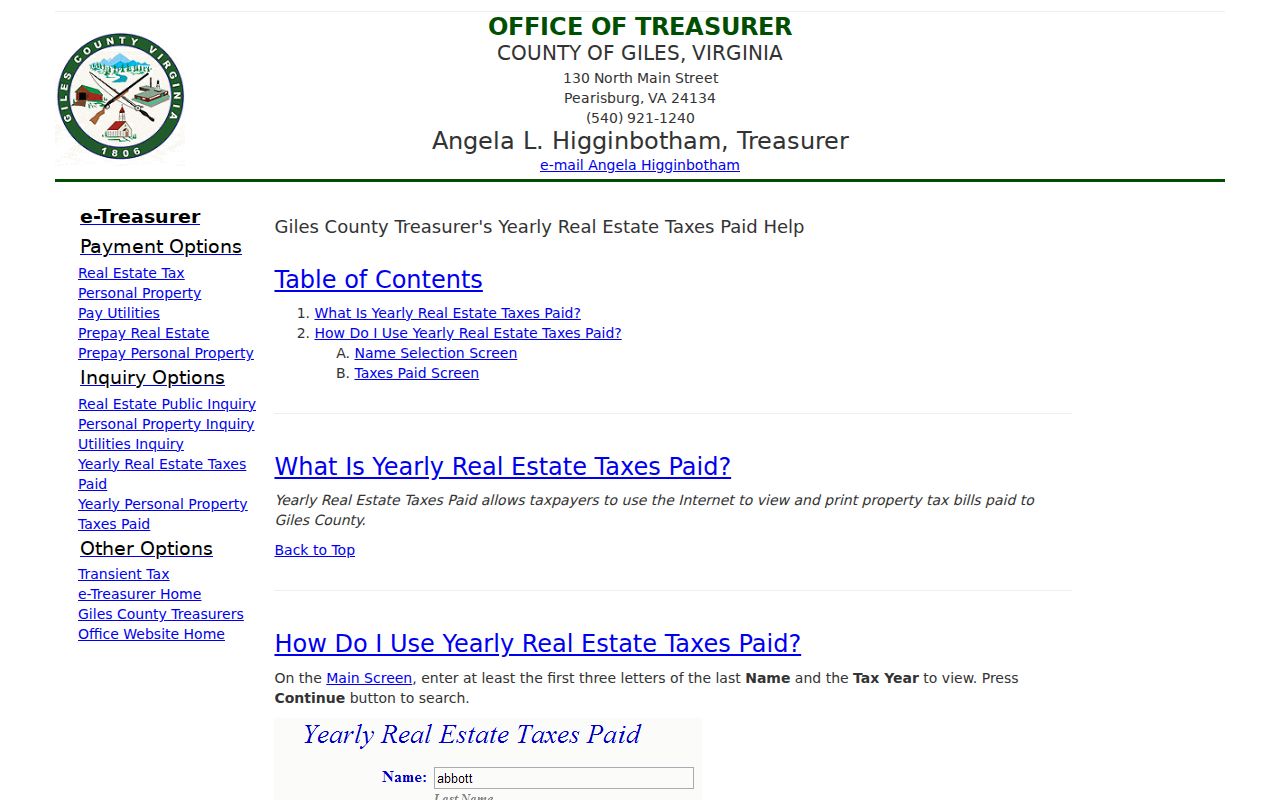
Match the map number and ticket fields to the parcel before drawing any conclusion from a payment.
Reassessment and Giles County Values
Giles County reassesses real estate every four to six years. The Commissioner's sales-ratio work leans on recent arm's-length sales. Those sales pull assessed values toward fair market value. Virginia Code § 58.1-3201 sets a 100-percent fair-market-value standard statewide. That standard is a statutory basis. It does not promise each current assessment equals what a buyer would offer today.
Land use and tax relief programs can shift the taxable outcome. The public pages give no full program list and no parcel eligibility rules. Ask the Commissioner what documentation a program requires. The Virginia assessment statute and the county's reassessment page spell out the value standard. Together they also cover the cycle.
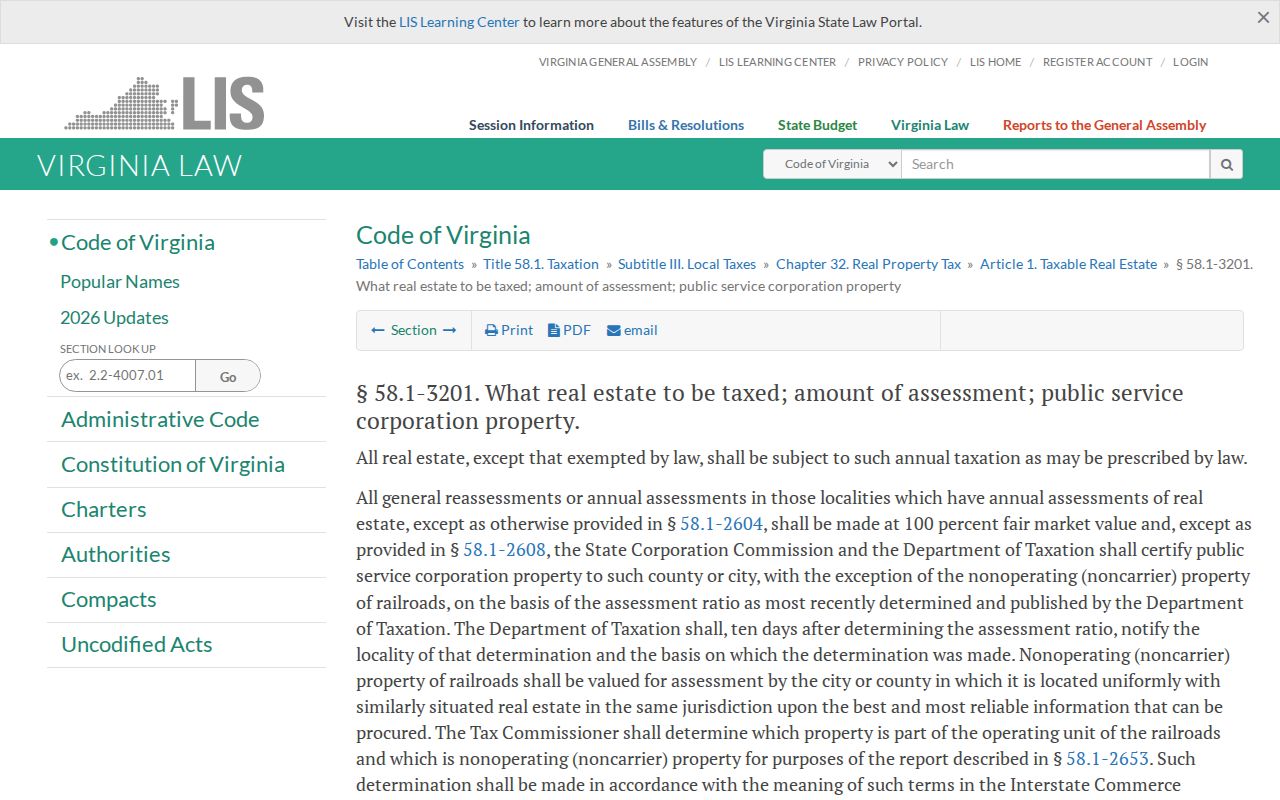
The statute fixes the statewide rule, while the county office sets each parcel assessment and explains how it got there.
Reviewing a Giles County Assessment
Questioning an assessment works best when you sort the problem first. Is the disagreement about parcel facts, or about valuation? Check acreage, improvements, use, and ownership against the current Commissioner record. Do this before holding up a neighbor's card or a recent sale. The office applies Virginia's fair-market-value rule on a four-to-six-year reassessment cycle. It publishes no universal appeal deadline for every taxpayer. Contact the Commissioner promptly for current review and appeal steps. Avoid borrowing a date from another county.
If an assessment looks wrong, start with the CAMA history. Compare the parcel's land and improvement details against that record. Then ask the office about the correction process and current review dates. No local appeal deadline, hearing board, or filing form appears on the public pages. Virginia Code § 58.1-3407 lays out a correction path. It also allows a circuit-court appeal for an erroneous assessment. Confirm which step fits your facts and the current cycle with the county office.
Keep one file for everything. Include the map number and the assessment date. Add any deed or plat reference. Include evidence of the factual error. A recent sale can add context. But the county's sales-ratio process and the statutory standard govern the outcome. Never wait on a guessed deadline or a general calendar from another locality.
Confirm the review date. Giles County's public research did not establish a local filing deadline or board name. Call the Commissioner at (540) 921-3321 before relying on a date or form.