
Giles County Deeds and Transfers
The Giles Circuit Court Clerk records land instruments. These place each transfer in the public chain. A deed conveys an interest in land. The conveyance may be a sale, a gift, a correction, or an estate transfer. Type and wording vary. Read the deed itself rather than assuming every instrument carries the same guarantees.
| Deed Type | What It Does | Common Use |
|---|---|---|
| Deed of bargain and sale | Records a conveyance and its legal description | Common ownership transfer reference |
| Deed of correction | Corrects or clarifies an earlier instrument | Follow the referenced prior deed |
| Deed of gift | Conveys an interest without a conventional sale | Family or estate transfer |
| Executor or heir conveyance | Records an estate-related transfer | Read with probate and fiduciary records |
| Deed of trust / release | Records a secured loan or its release | Encumbrance, not an ownership deed |
Deeds share the books with other instruments. Giles County records also include plats, easements, rights-of-way, assignments, liens, judgments, and lis pendens. A deed of trust or mortgage secures a debt. It does not transfer ownership like a conveyance deed. Releases, satisfactions, and assignments should be read beside the original instrument, and the Giles Circuit Court Clerk serves as local custodian for records and copies.
Giles County SRA Index and Images
Virginia's Secure Remote Access system goes by SRA or COVERS. It is the online route into the deed index. The statewide instructions leave choices to each court. A court's settings decide whether a free index exists. Images may require a clerk-authorized subscriber account. Giles sets no stated image cutoff. Its pages omit field order, result caps, and document lists. Find the instrument first. Then confirm image access and copy rules with the clerk.
The Virginia SRA explanation notes that an index hit is not always an image. The clerk's office sits at 501 Wenonah Avenue, Suite 1, Pearisburg. Hours are 8:30 a.m. to 4:30 p.m. Call (540) 921-1722 to confirm current access. The SRA/COVERS land-record entry is the remote starting point.
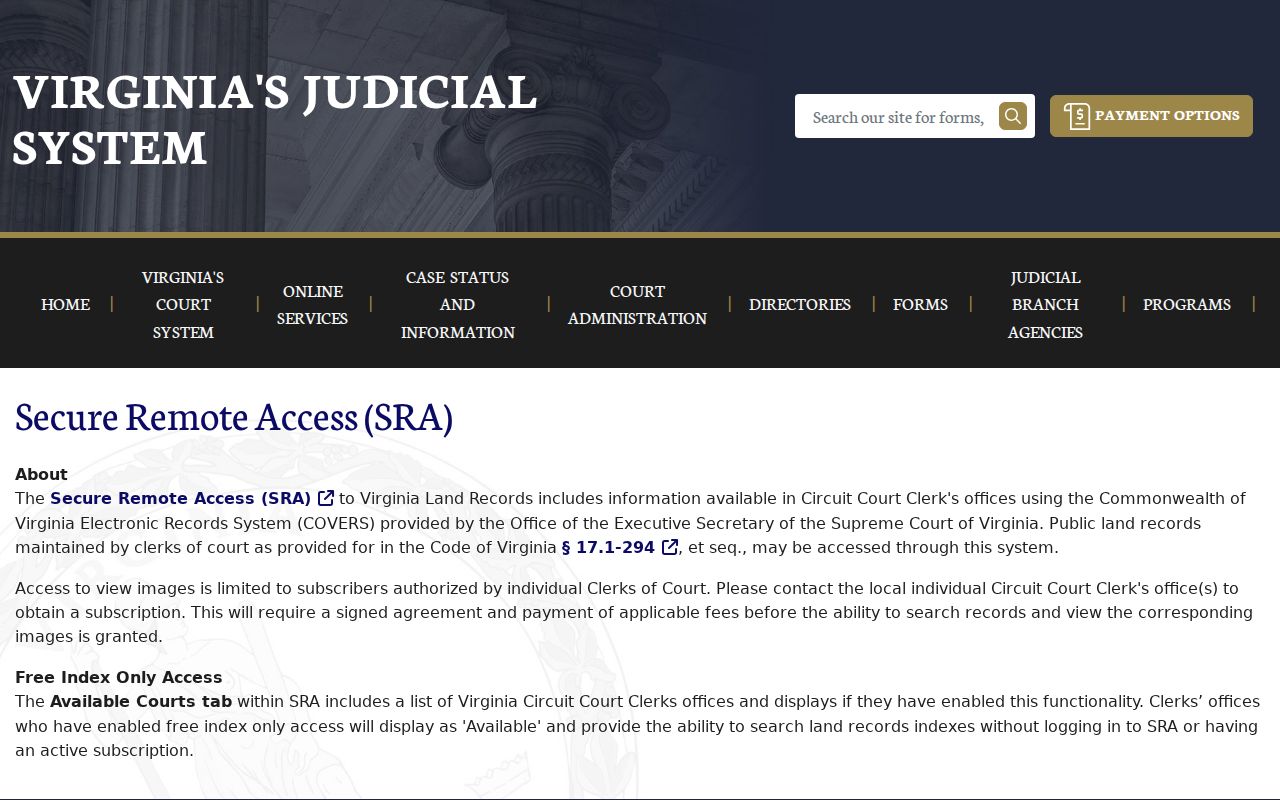
Virginia's access tiers are set statewide. The Virginia land-records entry page is the statewide starting point for SRA/COVERS access, while the Giles clerk controls local image availability.
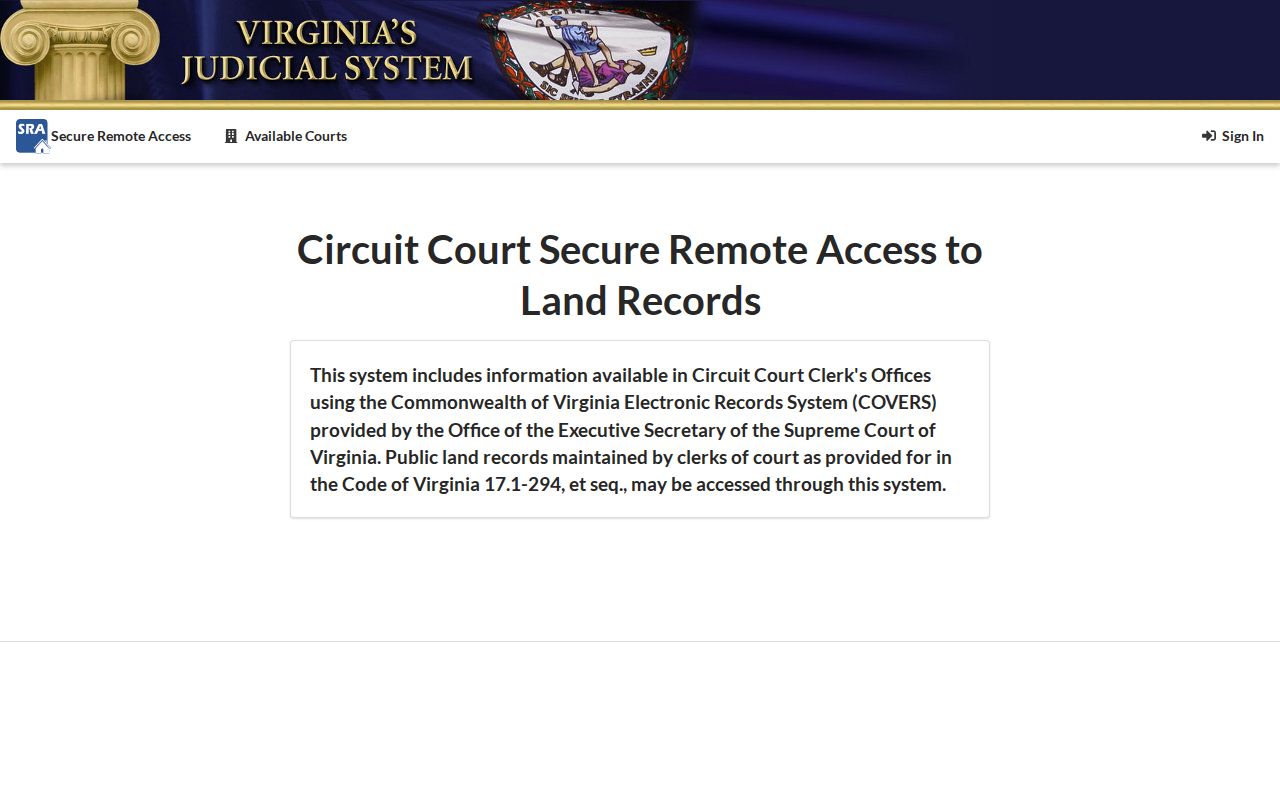
This is the entry page for the statewide service, not a Giles County instrument. It guarantees no image access.
Giles County Instruments Beyond Deeds
A property file can hold far more than deeds. Deeds of trust, releases, assignments, easements, rights-of-way, and mechanic's liens all appear. Tax liens, judgments, plats, and probate-related conveyances appear too. The Circuit Clerk indexes many of these in separate or related record series. Pair a party name with the parcel description. A common surname alone can point to an unrelated tract.
For a purchase or title review, start with the original loan instrument. Follow it forward through its assignments and releases. A judgment or lien may carry a later satisfaction. A lis pendens signals active litigation, not an ownership transfer. Some military-discharge records stay restricted. The county offers no fraud-alert signup. It publishes no fee schedule, so assume neither free images nor notification services.
Giles County Grantor and Grantee Names
Virginia law requires deed books and several related record books to be indexed. The SRA public help does not show Giles County's exact field labels, date filters, or document-type menu. Verify the live screen or ask the clerk. Start from a known deed or owner. Follow the parties and recording references from there. Search behavior labeled one way in another county may not match the labels or date handling here.
For a chain question, take each deed's grantee and find the instrument by which that party acquired the land. Then read the grantor and recording reference. Keep the legal description in view throughout. A parcel may carry metes-and-bounds language, a later plat, or a lot-and-block description, and those terms can shift over time.
- Locate the latest deed for the parcel and note its grantee, grantor, date, and book or instrument reference.
- Search the named grantee as a grantor to see a later transfer, then search that same party as a grantee to find the earlier acquisition.
- Compare the legal description and parcel context at each step; pause when the description changes.
- Ask the clerk or use the LVA finding aid when the online index stops or the chain reaches an older book.
- Grantor
- The person or entity conveying an interest.
- Grantee
- The person or entity receiving an interest.
- Chain of title
- The ordered record of conveyances tied to one property.
- Book and page
- A volume reference used in older record citations; confirm the clerk's citation for each item.
- Instrument number
- A document identifier when that reference is used by the record system.
Giles Deed Books Reach to 1806
Giles County deed records reach back to 1806. The general deed index runs from that year through 1923, and a separate grantee index covers 1941 through 1976. Plat books run from 1887 to 1947. Subdivision plats continue from 1947 to 1976. Each range comes from a Library of Virginia finding aid for Giles County land records. These ranges describe archival series, not a promise that every parcel shows up in each interval or that the online system searches all of it.
For a nineteenth-century transfer, gather the details first. Record the deed book, page, parties, and date from the index. For later material, note grantor versus grantee and keep the exact instrument identifier. Indexes can end midstream. A gap in coverage is not the same as a gap in title. When one series stops before the next begins, ask the Circuit Court Clerk how to bridge the gap, because a break in an online index may mark a series boundary rather than a missing conveyance.
The catalog lists overlapping and continued runs. So capture the reel, book, year, and page or image for every citation. Do not assume one modern format. Plat and survey materials sit apart from the deed books in the catalog, and citations built from different eras often look nothing alike, which is normal.
The LVA Giles finding aid is the map to these reels. Many reels are flagged for interlibrary loan. Viewing microfilm at the Library is free. A local library can add historic context. The Circuit Court Clerk remains the custodian of current recorded instruments, so anything recent lives at the courthouse rather than on film.
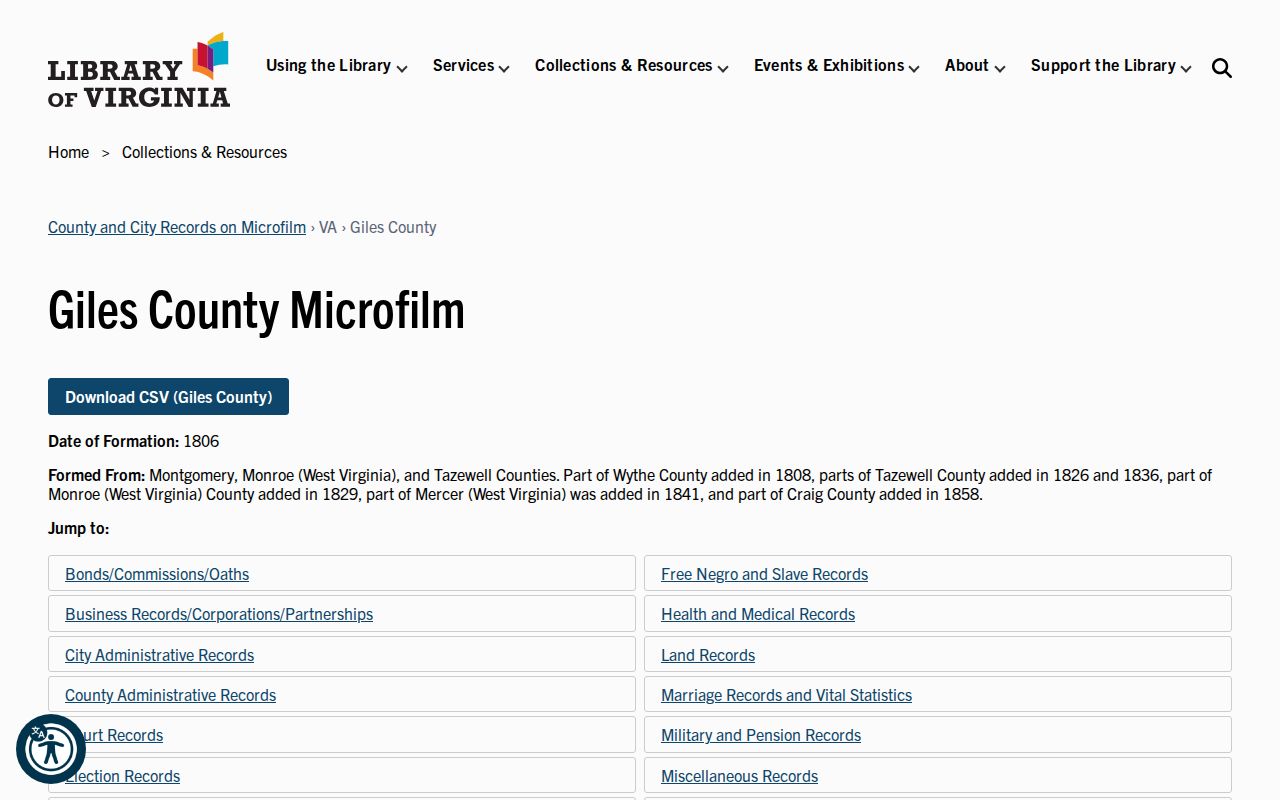
The finding aid lists runs reaching past the modern index.
Before Giles County Existed
Modern county lines hide where old deeds live. Giles County formed in 1806 from Montgomery, Monroe, and Tazewell land. Later adjustments touched Wythe, Tazewell, Monroe, Mercer, and Craig. A tract's oldest deed may sit elsewhere. It may rest in a parent county's books rather than Giles deed records. Start with the known parcel and work backward. When the jurisdiction changes, switch to the predecessor's record set for the earlier conveyance.
Boundary history is a working search clue. A deed from before 1806 may rest on an old land grant, survey, or metes-and-bounds call. That description may bear no resemblance to a modern street address. Compare the contemporary deed against older survey and plat references. One neighboring tract can fall to a different successor county. Match the historical jurisdiction named in the instrument to the modern parcel. Do this before dismissing an older index. The Library of Virginia catalog's county and series notes help pick a likely volume. But the Clerk should confirm where a missing modern copy is held.
Crossing a county line is common in this region. It does not break the chain. The LVA catalog and the relevant clerk can point you to the right book. They can help when the chain leaves Giles. Note the change and keep going. Each parent county kept its own deed books, grantor and grantee indexes, and plats. The trail simply continues under a different heading.
Probate and Giles County Land
A chain can look broken when an owner dies. Giles probate records explain what happened next. The LVA catalog lists an index to wills and fiduciaries from 1806 through 1976. Will books span 1806 to 1924. Search the last recorded owner in the clerk's probate index. Read the will or estate settlement for the land description. Then hunt for a deed from an executor, administrator, or heirs.
A will explains succession. But the recorded deed supplies the public conveyance reference that title work depends on. A death certificate confirms an event. It does not transfer title on its own. For older family context, the Giles County Historical Society and the Pearisburg Public Library both support genealogy. Both also support local-history work. The clerk's recorded deed remains the controlling land record for Giles County parcels.
Getting a Giles County Deed Copy
Start with SRA/COVERS if that index is open to you. Confirm with the Circuit Court Clerk before relying on remote images. At the counter or by phone, give the parties and the recording date. Also give the book and page or instrument number. Add the legal description if you have it. The clerk publishes no copy-fee schedule or mail-order form. So confirm current payment, certification, delivery, and image rules rather than guessing an amount.
The office sits in Pearisburg at 501 Wenonah Avenue, Suite 1. The court page lists a fax, phone, and weekday hours. A certified copy comes straight from the custodian. It is an authenticated document, not a printout of an index result. Legal filings and title transactions often require the certified version. The Giles Circuit Court contact page lists the local office details.
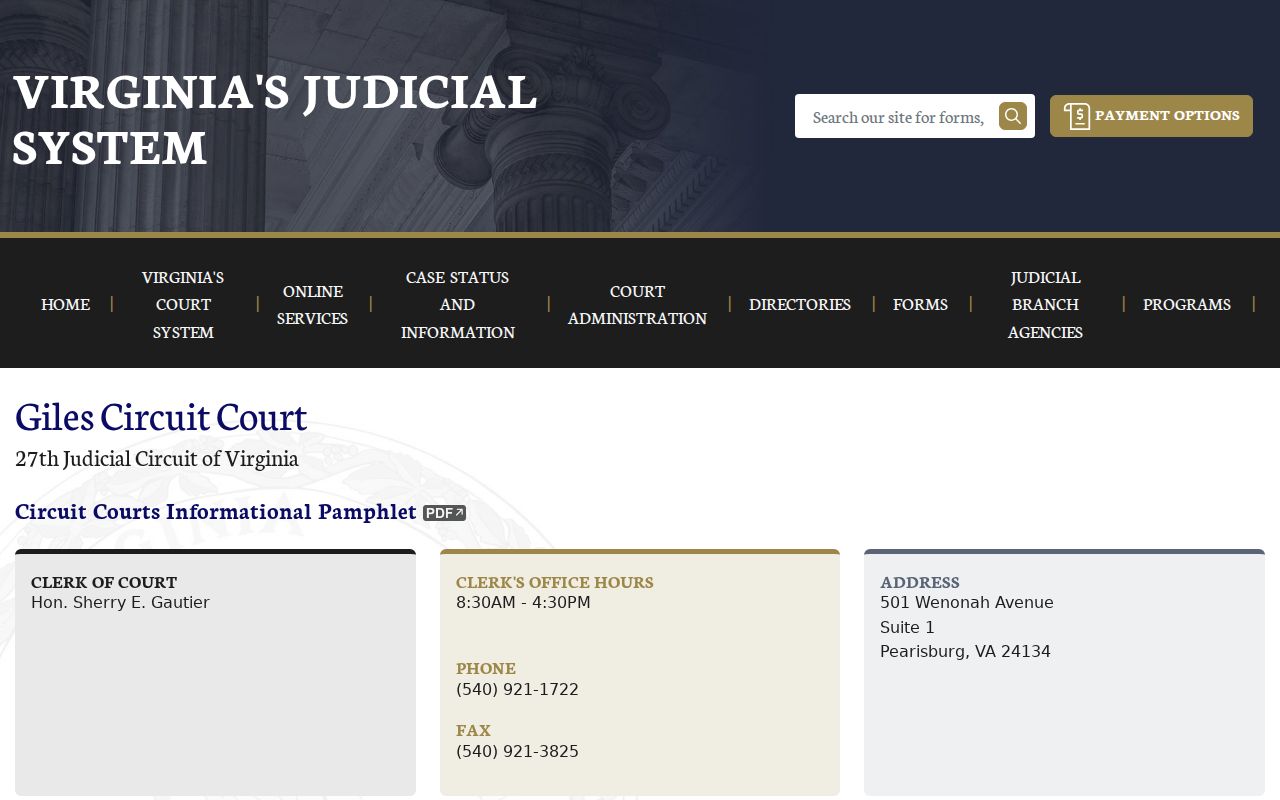
Confirm reference and copy process with the clerk before traveling.
Recorded, not guaranteed. The Giles County deed index reports documents that reached the record. It is not a title opinion, and an unrecorded or separately held interest may not appear in one search.